- SBEYTSDENDMH
Skills Bootcamp in Early Years Technical Specialist
- November 6, 2026
- March 12, 2027
- Liverpool (Blended)

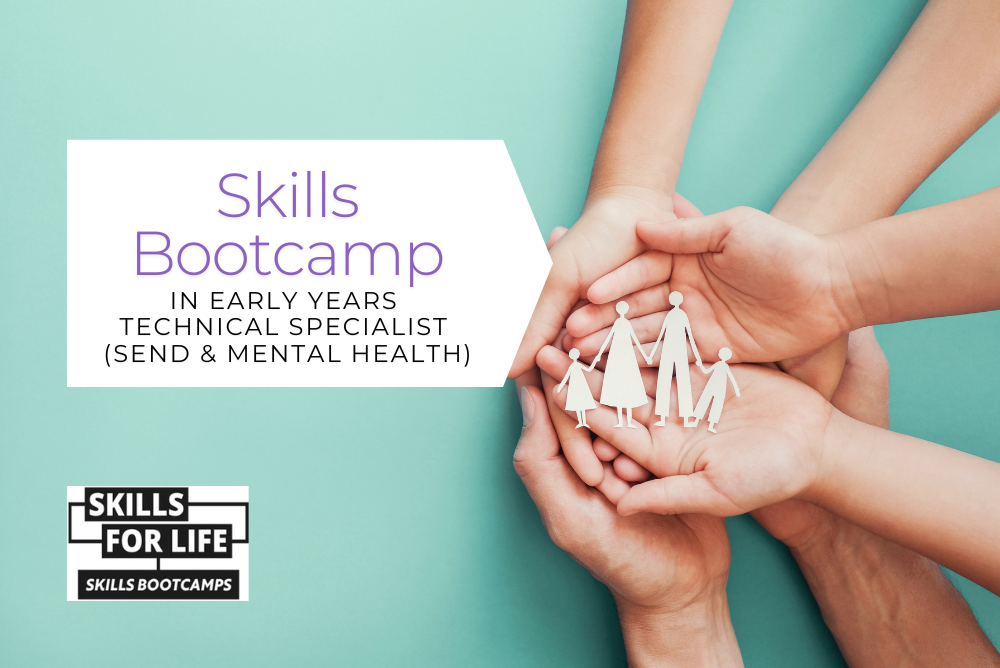
Take your Early Years career to the next level with our Skills Bootcamp in Early Years Technical Specialist (SEND & Mental Health).
Designed for qualified Early Years practitioners, this specialist programme will equip you with the knowledge, practical tools and nationally recognised qualifications needed to support children with Special Educational Needs and Disabilities (SEND), promote positive mental health and wellbeing, and contribute to inclusive practice across Early Years settings.
Skills Bootcamps are Government-funded, flexible courses of up to 16 weeks, giving people the opportunity to build up sector-specific skills and get sustainable job outcomes.
Delivered through a flexible blend of online learning and practical workshops, this Skills Bootcamp supports progression into enhanced responsibilities such as SEND Champion, SENCO Support Practitioner, Inclusion Lead or Wellbeing Lead.
The demands placed on Early Years practitioners have never been greater. Settings are supporting increasing numbers of children with SEND, speech and language needs, social, emotional and mental health needs, sensory processing differences and complex medical requirements. At the same time, Ofsted continues to place significant emphasis on inclusion, early intervention and high-quality support for all children.
This Skills Bootcamp has been designed specifically to help Early Years providers strengthen internal expertise, build specialist capability and develop future leaders within their workforce.
Rather than relying solely on external support, this programme enables employers to grow expertise from within their own teams.
Learners will develop the skills and confidence to:
Children’s social, emotional and mental health needs continue to be a growing priority across the Early Years sector.
This programme equips practitioners with practical strategies to:
The programme directly supports key areas of focus within Early Years inspection frameworks, including:
By investing in specialist staff development, settings can demonstrate a proactive approach to quality improvement and workforce development.
The programme is ideal for practitioners who may progress into:
This creates a sustainable talent pipeline and helps employers strengthen succession planning within their organisation.
A unique feature of this programme is the inclusion of the FAA Level 3 Award in Immediate Management of Anaphylaxis.
As awareness of children’s allergies and medical needs continues to grow, Early Years providers are facing increasing expectations around allergy management, emergency preparedness and safeguarding. The inclusion of anaphylaxis training reflects the heightened national focus following the tragic death of five-year-old Benedict Blythe, which has led to growing support for Benedict’s Law and calls for stronger allergy awareness and staff training across education and childcare settings.
This specialist training equips practitioners to:
For many employers, this training alone represents a significant workforce development opportunity, helping them prepare for future requirements associated with Benedict’s Law whilst ensuring children with allergies and medical conditions can participate safely and fully in Early Years education.
Skills Bootcamp in Early Years Technical Specialist

Unlike many training programmes that focus primarily on theory, this Skills Bootcamp combines accredited qualifications with practical workshops. Learners leave with practical strategies, resources and tools that can be implemented immediately within their setting.
The 16-week programme includes:
Qualification Number: 610/4540/8
This specialist qualification is designed for Early Years practitioners who support, or aspire to support, the role of the Early Years Special Educational Needs and Disabilities Co-ordinator (SENDCo).
Learners will develop the knowledge and practical skills required to work alongside SENDCos in identifying needs, supporting inclusive practice and helping to coordinate effective support for babies and young children with SEND. The qualification explores how SENDCo Assistants work collaboratively with children, families, colleagues and external professionals while adhering to current SEND legislation, statutory guidance and best practice within Early Years settings.
The programme covers key areas including:
Unlike many SEND awareness courses, this qualification requires learners to demonstrate both knowledge and practical skills, ensuring learning can be applied directly within the workplace. It provides an excellent foundation for practitioners looking to progress into SEND Champion, Deputy SENDCo, SENDCo Assistant or future SENDCo roles.
Qualification Number: 610/4509/3
This specialist qualification is designed for Early Years practitioners who want to develop a deeper understanding of children’s mental health, emotional wellbeing and the factors that can influence emotional development during the early years.
Learners will develop the knowledge, understanding and practical strategies needed to recognise and support the mental health and wellbeing needs of babies and young children. The qualification explores the importance of positive relationships, early intervention and creating nurturing environments that help children thrive emotionally, socially and developmentally.
The programme covers key areas including:
As awareness of children’s mental health continues to grow, this qualification provides practitioners with practical tools and evidence-based approaches that can be applied immediately within nursery and Early Years settings. Learners will gain a greater understanding of how early experiences shape development and how practitioners can help children build the foundations for lifelong emotional wellbeing.
The qualification supports settings in responding to increasing levels of social, emotional and mental health need, while strengthening inclusive practice and early intervention. It is particularly valuable for practitioners who support vulnerable children, children with SEND, or those experiencing barriers that may impact their emotional wellbeing and development.
Qualification Number: 601/4738/6
Delivered through a dedicated face-to-face practical workshop, this nationally recognised qualification equips practitioners with the knowledge, skills and confidence to recognise and respond effectively to severe allergic reactions and anaphylactic emergencies within Early Years settings.
As the number of children with allergies and complex medical needs continues to rise, Early Years providers are increasingly expected to ensure staff are appropriately trained to support children’s health, safety and wellbeing. This qualification provides practical, hands-on training that prepares practitioners to respond quickly and appropriately should a child experience a life-threatening allergic reaction.
The training covers:
A unique aspect of this programme is its relevance to the growing national focus on allergy awareness and child safety following the tragic death of five-year-old Benedict Blythe. The introduction of Benedict’s Law has highlighted the importance of ensuring education and childcare professionals are equipped with the knowledge and practical skills needed to recognise allergic emergencies and respond effectively. This qualification helps practitioners and employers prepare for evolving expectations around allergy management, staff training and safeguarding responsibilities.
The workshop includes practical demonstrations, real-life scenarios and hands-on use of training auto-injectors, giving learners the opportunity to build confidence in a safe and supportive learning environment. By the end of the training, learners will be able to respond calmly and effectively during an allergic emergency and contribute to stronger medical needs provision within their setting.
Ideal for: Early Years practitioners, SENCOs, Room Leaders, Nursery Managers, Inclusion Leads and anyone responsible for supporting children with allergies, medical needs or complex health conditions within an Early Years setting.
6 Guided Learning Hours | Face-to-Face Specialist Workshop
Effective communication is at the heart of children’s learning, development and wellbeing. This practical workshop focuses on supporting babies and young children who experience speech, language and communication difficulties, including those with SEND, developmental delays and social communication needs.
Learners will explore a range of evidence-based strategies and communication tools that can be implemented immediately within Early Years environments to support participation, engagement and positive outcomes for children.
The workshop covers:
Through practical activities and demonstrations, learners will gain hands-on experience with resources commonly used to support communication and interaction, including visual timetables, communication boards, social stories and other inclusive communication tools.
By the end of the workshop, practitioners will feel confident implementing practical strategies that support children’s communication, independence and inclusion within their own settings.
6 Guided Learning Hours | Face-to-Face Specialist Workshop
Many children experience challenges with sensory processing, emotional regulation and self-management. This highly practical workshop provides learners with the knowledge and tools needed to better understand sensory differences and support children’s emotional wellbeing within inclusive Early Years environments.
Learners will explore how sensory processing difficulties can impact behaviour, communication, learning and social interactions, while developing practical strategies to help children regulate their emotions and engage successfully in everyday activities.
The workshop covers:
The session includes opportunities to explore a range of sensory resources, regulation tools and practical approaches that can be adapted to meet individual children’s needs. Learners will gain ideas that can be implemented immediately to support calmer, more inclusive and emotionally supportive learning environments.
By the end of the workshop, practitioners will have increased confidence in supporting children who require sensory and emotional regulation support, helping them to participate more successfully in nursery life and learning experiences.
6 Guided Learning Hours | Face-to-Face Specialist Workshop
Early identification and intervention are critical in improving outcomes for children with additional needs. This specialist workshop equips practitioners with the practical skills and confidence needed to recognise emerging concerns, gather meaningful evidence and contribute effectively to assessment and support planning processes.
The workshop focuses on helping practitioners understand their role in identifying need at the earliest opportunity and ensuring children receive timely and appropriate support.
The workshop covers:
Using case studies, practical examples and real-world scenarios, learners will explore how effective observation, assessment and intervention can improve children’s outcomes and support successful inclusion within Early Years settings.
The workshop also helps practitioners develop confidence in understanding SEND processes, documenting concerns appropriately and contributing meaningfully to the planning and review of support arrangements.
By the end of the workshop, learners will have practical tools, templates and strategies that can be used immediately within their own setting to strengthen early intervention and inclusive practice.


This Skills Bootcamp has been developed specifically for employed Early Years practitioners and is available through employer-supported places only.
Employer contributions are:
For a relatively small employer contribution, participating settings receive a 164-hour specialist workforce development programme, three nationally recognised qualifications, practical SEND training that can be immediately implemented within their setting.
This Skills Bootcamp is available to:
✅ Nurseries, pre-schools and Early Years providers within the LCRCA seeking to upskill existing staff
✅ Practitioners employed within participating Early Years settings
✅ Employers looking to develop SEND, Inclusion and Wellbeing Champions within their workforce
This programme is not available as a self-funded course and places cannot be booked directly by individuals. All learners must be employed by and supported through a participating employer.
This Skills Bootcamp has been designed to support workforce development and progression within existing employment.
Following completion, learners may progress into enhanced responsibilities including:
Learners will be equipped with specialist skills that help strengthen provision and improve outcomes for children and families.
By participating in the programme, employers can:
610/4540/8; 610/4509/3; 601/4738/6
16 weeks
164
Ncfe CACHE
Blended
To join this Skills Bootcamp, learners must:
| Component | GLH |
| NCFE CACHE Level 2 Technical Specialist SENCO Assistant | 35 |
| NCFE CACHE Level 2 Technical Specialist: Mental Health in the Early Years | 105 |
| SEND Tools Workshops:
· Communication workshop · Sensory workshop · Early intervention and assessment |
18 |
| Immediate Management of Anaphylaxis | 6 |
| Total GLH | 164 |
Portfolio of Evidence
Practical Demonstration
Learners must be working within an Early Years setting and be co-funded by their employer
Ready to develop SEND, Inclusion and Wellbeing expertise within your workforce?
Contact our team today to discuss employer eligibility, funding and available places.
Places are limited and allocated on a first-come, first-served basis.